
Researchers studying Bitcoin are targeting privacy coins using Zcash-style shielded transfers.
CryptoSlate reported that a Sept. 24 paper by Clara Shikhelman, Mikhail Komarov and Aleksei Moskvin, all of [alloc] init, introduced Shielded Bitcoin. It is a metaprotocol placed above Bitcoin that could let people send BTC while hiding how much moves, who sends, who receives and how separate payments connect. The proposal needs no soft fork, does not alter Bitcoin's consensus rules and does not create another blockchain.

Bitcoin Would Timestamp the Data, Not Police the Privacy
Participants would keep BTC balances as encrypted notes. To move value, a sender would broadcast an envelope with encrypted outputs, public nullifiers showing that earlier notes have been spent, and a zero-knowledge proof that the inputs are owned and the total value is preserved. On-chain readers would not see the amount or the two sides of the transaction.
Miners and nodes would not run Shielded Bitcoin's checks. They would only place envelopes that follow the protocol into Bitcoin blocks in the recorded order. Software that implements the proposal would scan BTC blocks, replay accepted transfer envelopes in that order and rebuild a shared note tree and a record of spent notes. Bitcoin's role would be to provide the timestamped transaction history and ordering needed to reconstruct the private state; the shielded balances and transfer verification would live in the separate protocol.
The current implementation profile uses OP_RETURN to carry the encrypted data, but the authors say other publication choices may be possible. That separates it from Zcash, where shielded payments are validated by the chain's own consensus rules. Here, BTC consensus remains unchanged, and a separate private state is reconstructed from data anchored to Bitcoin.
Some Leaks Would Remain, and Entry Is Not Fully Solved
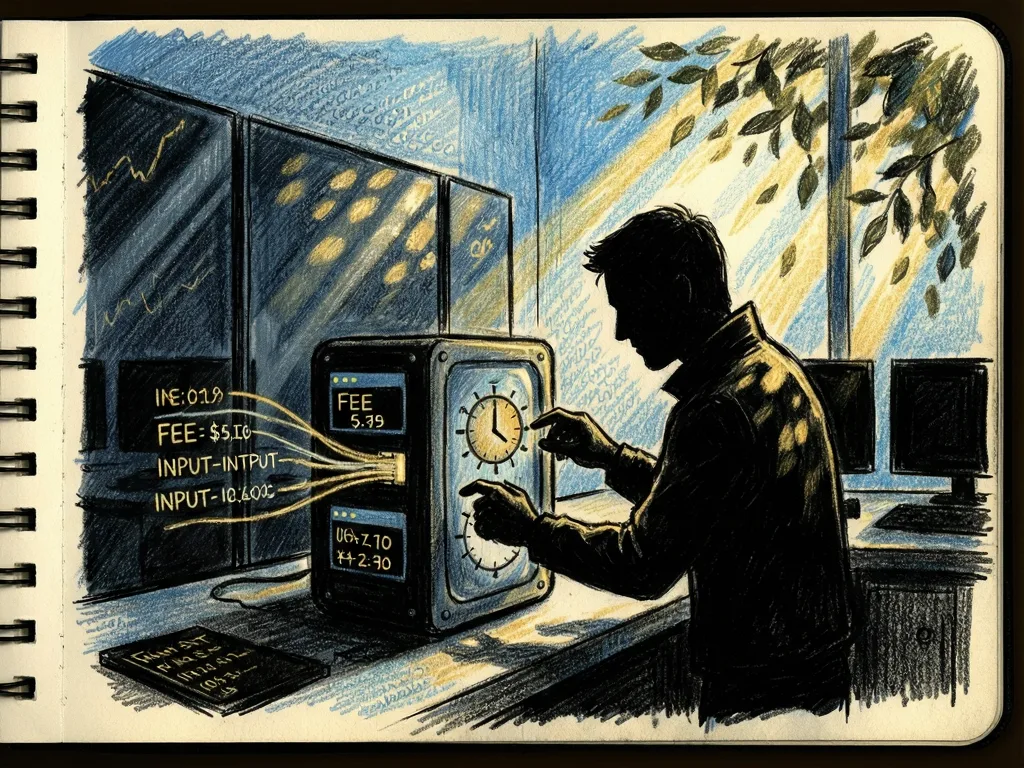
Existing Bitcoin privacy methods such as CoinJoin, PayJoin and Silent Payments can make tracing harder or reduce address reuse, but the amounts and many transaction details stay visible. Shielded Bitcoin would go further, but not all the way. Observers could still study when transfers happen, what fees are paid, how many inputs and outputs are involved, and other features of the Bitcoin transaction that carries the encrypted data.
The paper also describes viewing capabilities that let a user reveal selected transaction details without handing over control of the funds. That could create a path for auditing or compliance where required.
The biggest unfinished part is how ordinary BTC enters and leaves the shielded system. The current specification does not cover peg-in and peg-out. Those flows would have to lock Bitcoin on mainnet, represent the locked value inside the private note system, and later release the corresponding BTC when users exit. [alloc] init expects those flows to rely on its PIPEs v2 work, but the detailed construction has not been published.
That leaves open questions about whether entry and exit can be made trustless, private and resistant to transaction linkage. If a deposit or withdrawal has a distinctive amount, timing or pattern, outside observers might still connect the two sides. The researchers also have not settled the final proof system, the publication format, or a way for light clients to verify the shielded state without replaying all relevant Bitcoin history.
The Proposal Arrives During a Zcash Privacy Revaluation
The idea comes as privacy-focused cryptocurrencies again attract investor attention, reopening a long-running question about whether separate privacy chains still have a lasting technical edge over Bitcoin. André Dragosch, Bitwise Europe Head of Research, called Shielded Bitcoin a potential headwind for privacy coins. He pointed to the risk that capabilities formerly tied to standalone networks may be recreated around Bitcoin without altering its monetary rules or base-layer consensus.
That argument is most consequential for Zcash, where privacy is now central to the recent revaluation of the token. ZEC climbed above $1,600 this week as shielded use accelerated and investors revisited the idea that Zcash provides native transactions able to conceal senders, recipients and amounts.
Activity moved alongside the price. Weekly shielded transactions recently reached 62,379, the most since 2022, while nearly 5 million ZEC were held in shielded pools this month. The network also settled more than $23 billion in transfer volume last week, its highest weekly total since 2021.
Shielded Bitcoin pressures that narrative because it seeks to deliver comparable transaction confidentiality while keeping BTC as the underlying asset. If the system eventually works as designed, people who want stronger privacy may have an alternative to switching to a dedicated privacy coin.
Sam Callahan, director of strategy and research at Bitcoin treasury company OranjeBTC, said the development fits a broader view that Bitcoin can add capabilities over time without trying to match other chains feature by feature. He said Bitcoin does not need to win every feature race, that privacy, speed and functionality can be added gradually, and that the chain's moat is decentralization, security and credible monetary policy. He added that nothing else comes close on those dimensions.
Risk Warning
This article is only an information compilation and does not constitute investment advice, legal advice, or a recommendation to buy or sell any cryptocurrency. Bitcoin and privacy-focused assets can be highly volatile, and technical proposals may face uncertainty, delays, or regulatory challenges. Readers should independently verify information, assess risks carefully, and make decisions based on their own judgment and financial circumstances.
评论