
Ethereum Now Enables Users to Pay for AI Without Revealing Their Identity
Ethereum Foundation and Open Anonymity Project Launched zkAPI on Ethereum Mainnet on October 1 Using USDC Prepayment and OpenRouter AI Keys
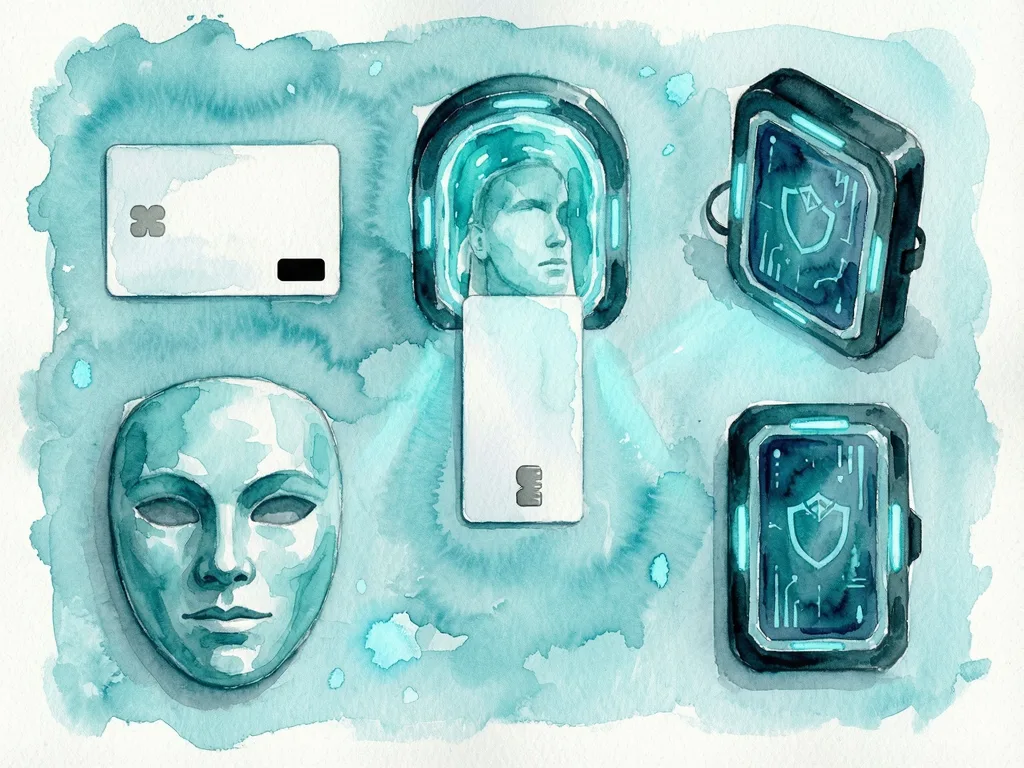
On October 1, the Ethereum Foundation and the Open Anonymity Project introduced zkAPI as a live system on Ethereum mainnet. The protocol lets users prepay in USDC and receive capped, short-lived API keys through zero-knowledge proofs. The goal is to let people buy AI access without attaching their payment identity to the questions they ask. The project repository still labels the protocol experimental, and its documentation points to OpenRouter as the AI provider behind the keys.
Why the Foundation Framed AI Payments as a Privacy Problem
The Foundation's argument is that prompts are personal because people ask AI models about their health, their finances, and their doubts. In a normal AI arrangement, the party that holds the billing relationship can also see a running transcript of what the user is asking. zkAPI is meant to separate payment from identity.
That privacy concern is not abstract. In May 2025, a federal court ordered OpenAI to preserve its output logs, including chats users had deleted, in a copyright lawsuit brought by The New York Times and other publishers. The episode shows that prompt history can remain tied to an account, even after a user deletes the visible record.
The system does not claim to make the AI provider blind to the prompt. It tries to keep the payment layer separate from the question layer. The provider may see what was asked; the payment layer may see what was spent; neither side can link the two.
How zkAPI Uses Proofs, Temporary Keys, and Usage Receipts

Users deposit credits, including ETH and USDC, into a vault contract on Ethereum in one ordinary transaction. After that, the balance exists as a private note, described as digital cash that only the depositor can spend and that nobody can trace back to the deposit.
Each time a user wants to ask an AI something, software on the device builds a zero-knowledge proof, a mathematical receipt that proves a fact without showing the details behind it. In this case, the proof shows that the user has enough funds and has not already spent them. The server checks the proof and returns a temporary API key, which works like a password that lets software talk to an AI service.
The key is capped at a dollar amount and lives only in the device's memory. Requests then go to the AI provider with that key and nothing else: no name and no payment details. When the key expires, the provider issues a signed usage receipt, and the user is charged for actual usage rather than the cap.
OpenRouter, OA Chat, and the Wider Agent Roadmap
The launch comes with OA Chat, a browser-based private chatbot that needs no installation, and the code is open on GitHub. The documentation describes short-lived keys that work with OpenRouter, a service that gives access to hundreds of AI models through one connection. Any app that speaks the OpenAI format can plug in by pointing at a local address.

The idea follows a February 2026 Ethereum Research proposal by Davide Crapis and Vitalik Buterin. Crapis leads the Foundation's dAI team, which aims to make Ethereum the preferred settlement and coordination layer for AIs. He had already pitched Ethereum as plumbing for software agents. In August 2025, Crapis and Marco De Rossi proposed the ERC-8004 standard, a shared rulebook that lets autonomous AI agents find each other, verify identity, and transact. Crapis predicted that most Ethereum traffic would come from machines within three to five years.
Buterin ran the same thread. On February 10, he laid out an Ethereum-AI roadmap that included zero-knowledge payments for private API use. In April, he showed the other path: running an open-source model locally on his own Nvidia 5090 graphics card instead of feeding his life to cloud services. Local models keep data at home, while zkAPI covers the case where prompts still travel to someone else's servers.
Experimental Status and What Readers Should Watch
The repository labels the protocol experimental and does not list a formal audit. Readers should treat zkAPI as a live privacy experiment, not as a finished guarantee that no one can ever connect a user to a specific AI request.
The same plumbing could cover other metered services, according to the post: blockchain data queries, image and video generation, virtual private networks, and payments between machines. Providers would have to accept a proof instead of an API key and settle signed usage receipts to integrate directly.
The announcement also pointed to Myriad with the question, "Where does Ethereum go next?" For readers, the practical takeaway is that zkAPI tries to make AI spending less identity-bearing on Ethereum mainnet by using USDC, ETH, zero-knowledge proofs, short-lived keys, and OpenRouter-backed access.
Risk Warning
This article is provided for general informational purposes only and does not constitute investment, legal, or financial advice. It summarizes public news about Ethereum, zkAPI, USDC, and AI privacy tools. Cryptocurrency assets are highly volatile and may lose substantial value; regulatory, technical, and market risks may also apply. Readers should independently verify facts, assess their own risk tolerance, and consult qualified professionals before making any decision related to digital assets or decentralized applications.
评论