
Vitalik Buterin outlines the vision for 2030: Ethereum will surpass blockchain
See also Ethereum co-founder Buterin proposes a parallel computing and privacy solution that hopes to boost capacity and hide wallet query metadata; ZEC shield pool about 4.9 million units on Friday, priced at approx.$1,660The Shielded Bitcoin paper published on Thursday proposes to study the design of Zcash and BTC 's access mechanisms.

The label Ethereum , privacy computing, Zcash , Bitcoin , and the expansion of blockchain
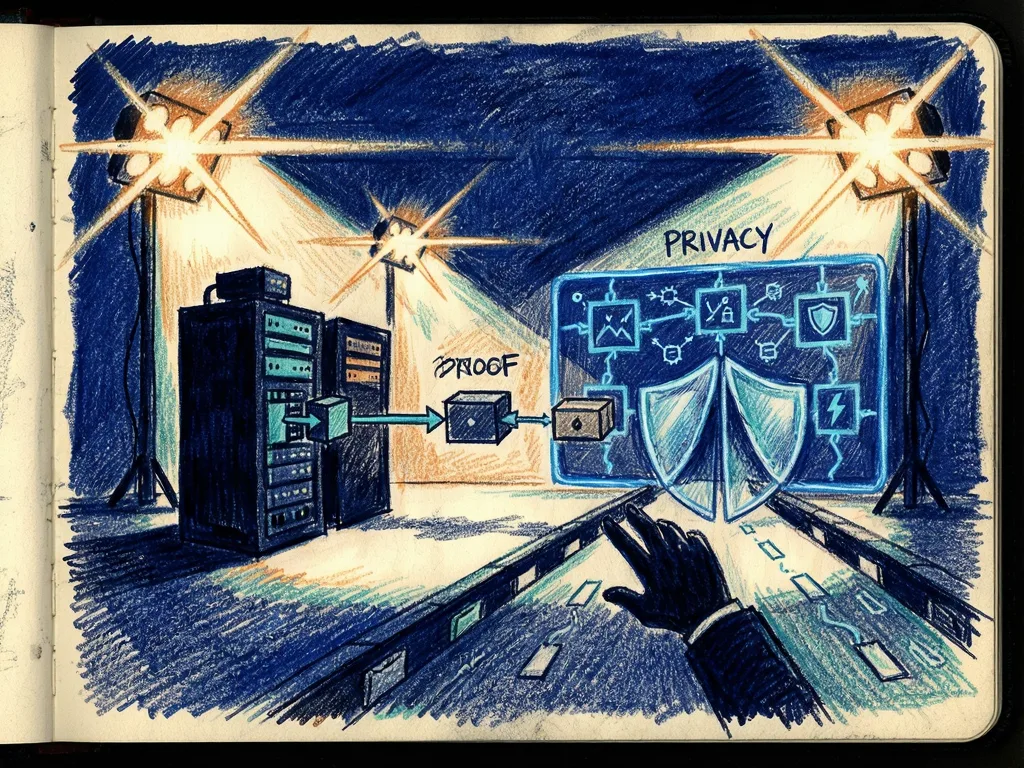
Featured mapAbstract tech-finance style, blue blockchain network, privacy shields and parallel computing nodes with no real people, exchange trademarks or specific price figures.
Core facts: Buterin puts scalability and privacy on the same roadmap
Buterin, the co-founder of Ethereum , proposed that Ethereum would allow computers to handle different tasks simultaneously, thus gaining higher capacity and more independent validation. However, on-chain still needed to resolve important stacking problems such as which payment should be confirmed first when two payments for the same amount are competing. To reduce information recorded on blockchain , he suggested doing more work behind a payment in advance and then merging certificates.
Parallel computing: Beyond capacity increases, payment order remains key
Ethereum used to require nodes to repeatedly execute and verify transactions in order to maintain consistency. If computers could handle different tasks simultaneously, both network capacity and independent checking capabilities would be improved. Buterin mentioned that payment sequencing is still a problem that must be solved, such as which two payments of the same amount occur first.
Wallet privacy: Checking balances can also expose account relationships
Viewing balances appears to be just reading account status, but is usually done by asking an external server for an address. The operator can learn which accounts a person is following even if the payments themselves are private. Buterin envisions hiding balance query requests along with payment details and rules used to approve spending on accounts. In this way, businesses can expose unrelated accounts when employees view their balances while keeping payments confidential.

Similar projects and follow-up views: ZEC shielding pool about 4.9 million, BTC papers drawing on Zcash
Other crypto developers are also pursuing similar goals. Zcash has already allowed users to send payments using encrypted addresses and amounts. According to CoinDesk's previous analysis of ZecStats data, about 4.9 million pieces of the ZEC were left in its shield pool on Friday; this was trading at a price of approx.$1,660The Shielded Bitcoin paper released on Thursday proposes borrowing the payment design of Zcash into BTC . Its specifications leave for further study the mechanism of actual deposits and withdrawals in Bitcoin .
These developments show that privacy is becoming a key issue. For readers, the follow-up worries are: whether Ethereum can maintain payment order consistency in parallel processing and truly reduce on-chain information through merging certificates; whether Shielded Bitcoin will solve BTC 's deposit/withdrawal mechanism; and whether wallet metadata hiding could land on portals without introducing new trust.
Warning signs
This article is for informational purposes only and does not constitute an investment recommendation. crypto asset The price fluctuations are large, there is uncertainty about the related technological and market developments, please readers to make rational judgements and prudent decisions.
评论