
Vitalik Buterin suggests public-key cryptography may require a couple more upgrades.
Ethereum Co-Founder Vitalik Buterin Says Public-Key Cryptography May Need One or Two Parameter Upgrades

Vitalik Buterin, the Ethereum co-founder, posted on X on October 7, 2026 that public-key cryptography may need one or two more parameter upgrades before it settles into long-term stability. The warning is aimed at future threats rather than current failure: he said rapid progress in AI-driven mathematics could significantly weaken important lattice schemes, including ML-DSA and Falcon, within two years. It matters because public-key encryption underpins secure messaging and virtual private networks, and a tenfold increase in lattice key sizes would change performance and costs for services outside blockchain.
What Buterin said in the post
The post focused on lattice-based cryptography, a family of encryption and signature schemes built on hard geometric problems involving grids of points in many dimensions. Buterin framed the adversary as AI, not a single known attack. He suggested AI-driven mathematics could materially improve the practical side of attacking lattice problems and named ML-DSA and Falcon as schemes that could be affected within two years.
His hedge was simple: increase lattice key sizes by a factor of ten. He limited that recommendation to public-key encryption, particularly in uses outside blockchain such as secure messaging and virtual private networks. The point was not that existing systems must be replaced immediately, but that parameters may need to become more conservative before long-term stability can be assumed.
Why hash-based cryptography cannot solve the whole problem
Buterin said he prefers hash-based cryptography when security is the priority. That preference is already visible in Ethereum’s plans: the roadmap known as Lean Ethereum has leaned on hash-based signatures such as WOTS and SPHINCS+, reducing reliance on primitives viewed as more vulnerable.
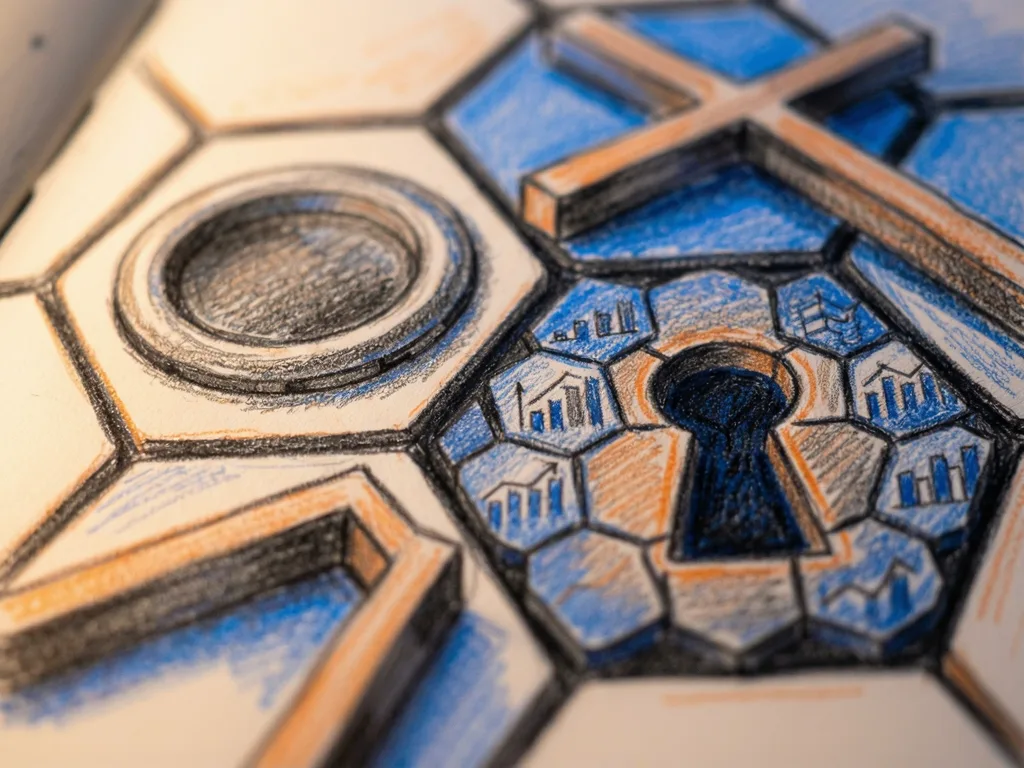
He acknowledged, however, that public-key encryption cannot rest on hashes alone. It needs mathematical structures that work as trapdoors, and building that kind of object requires structured mathematics, like lattices or code-based systems, which hashes do not provide. That is why the debate returns to lattice parameters rather than a simple switch to hash-based signatures.
Practical advice: stay calm and change small habits
Buterin cautioned against overreacting and gave modest advice for users. He recommended using fresh addresses for signatures made with the elliptic-curve digital signature algorithm, the scheme that secures most Ethereum accounts today. He also advised favoring off-chain confirmations for multi-signature transactions, the shared wallets that require several approvals before funds move.
The practical message was defensive: do not treat the warning as proof that Ethereum accounts are broken now. Instead, use address hygiene and transaction patterns that reduce exposure if cryptographic assumptions weaken.
Where this fits in Ethereum’s roadmap
Next on the calendar is the Hegotá upgrade, scheduled for 2027. Hegotá is expected to be the last major update that early Ethereum users would still recognize. After that, the network is anticipated to move toward more advanced designs built to be quantum-safe and AI-resilient, along with recursive STARKs.
Hoskinson pushed back
Not everyone agreed. Cardano founder Charles Hoskinson expressed skepticism about the need for drastic parameter increases when there is no concrete evidence that lattice schemes are actually vulnerable. His objection places the burden of proof on the threat model: without a published attack or clear mathematical breakthrough, larger keys may create cost and delay without measurable security gain.
What readers should watch
Buterin specifically flagged secure messaging and virtual private networks as areas where public-key encryption cannot simply swap to hashes. Those systems are where lattice-based post-quantum encryption is being adopted, and they would bear the cost of any key-size increase. The post also carried a separate newsletter line offering daily, free news about money, markets, and the world before your day starts, with 34,000+ readers across crypto, finance, and policy.
The things to track are any published attacks or improvements against ML-DSA or Falcon, whether standards bodies respond to calls for larger parameters, and how Hegotá’s 2027 rollout shapes Ethereum’s transition. For readers, the near-term value is not a new coin or price signal, but a clearer view of which cryptographic assumptions may become more expensive, and which security choices still make sense while the upgrade path remains uncertain.
Risk Disclosure
This article is provided for informational purposes only and does not constitute investment advice, a solicitation, or a recommendation to buy, sell, or hold any digital asset. Cryptocurrency markets and related technologies are highly volatile and may involve significant financial risk. Changes in cryptography, network upgrades, or regulatory developments can also affect values. Readers should conduct independent research, consider their risk tolerance, and seek qualified professional advice before making any investment decision.
评论