
US SEC Launches Tokenization “Innovation Exemption,” Opening the Door to On-Chain Stock Trading, but a DeFi Frenzy Is Still Premature
SEC Opens Five-Year Exemption for Tokenized US Stocks as Market Tops $6.4 Billion
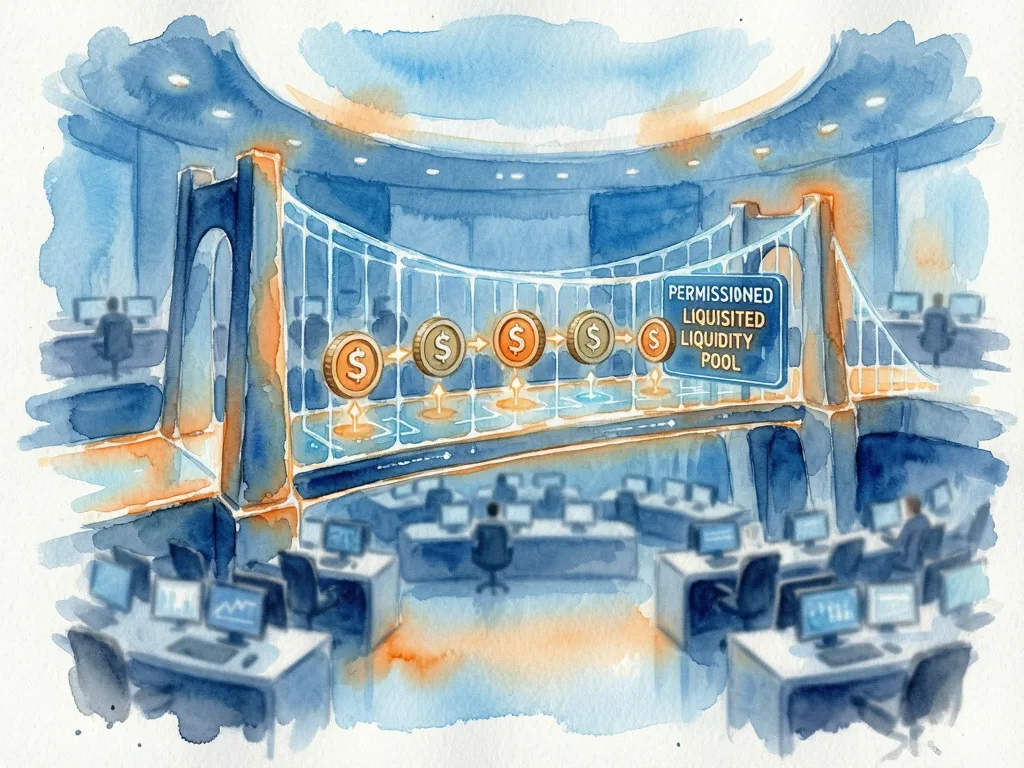
On September 17, SEC Chairman Paul Atkins said the agency was taking a major step to bring United States capital markets into the digital age. The same day, the SEC issued its Innovation Exemption order, creating a five-year conditional channel for trading tokenized National Market System stocks on public blockchains through permissioned automated market maker liquidity pools.
Under the order, platforms described as Tokenized Securities Venues may operate without being treated as exchanges under the Securities Exchange Act of 1934. Liquidity providers that use their own capital to supply tokenized National Market System stocks to the pools may also avoid being classified as dealers. The exemption is not a blanket permission for on-chain stock trading. It applies only to venues and pools that meet a detailed list of conditions.
Markets read the announcement as a major shift for tokenized securities. Securitize rose nearly 15 percent in a single day, Bullish advanced more than 6 percent, Coinbase and Robinhood also moved higher, and Uniswap governance token UNI briefly approached 18 percent in a 24-hour gain. The policy landed after the CLARITY Act stalled in the Senate, leaving Congress unable to pass a comprehensive crypto framework and pushing the SEC to move through an administrative exemption.
A Controlled Experiment With Hard Conditions
The SEC positioned the five-year window as a controlled experiment. Commissioner Mark Uyeda said the agency had used exemptions before to nurture products that later became common, including money market funds, index funds and ETFs. The same logic now applies to tokenized stocks, but the exemption preserves the SEC's power to tighten rules if the experiment does not produce the intended safeguards.
The conditions are strict. Trading symbols and volumes are constrained by limits tied to price-limit tiers. Tokenized stocks must give holders the same economic and governance rights as traditional National Market System stocks, including dividends and voting rights. Smart contracts used by the venues must be auditable, public and deployed on public, permissionless distributed ledgers. If the underlying stock is halted on the main board, the on-chain trading must stop at the same time.
Platforms must also publish operating and trading activity information. The order requires regular disclosure of dollar-denominated execution prices, trade size, trade time, pool addresses and end-of-day size. The aim is to reduce information gaps and give regulators enough visibility to monitor a market that can run continuously rather than only during exchange hours.
Two Lines Decide Who Can List
The most consequential boundaries are an issuer veto and a ban on synthetic products. If a Tokenized Securities Venue wants to list a third-party tokenized stock that it does not control, it must send written notice to the issuer and wait 30 days. If the issuer objects, that token cannot use the exemption.
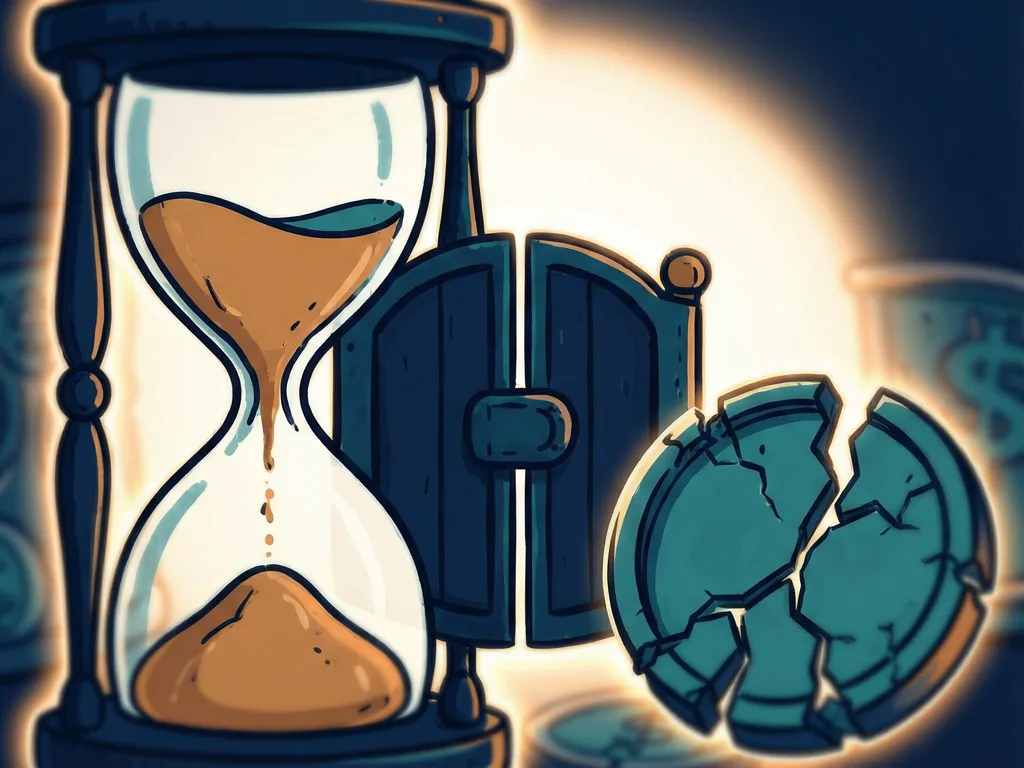
The second line excludes tokens that merely track a stock price without carrying actual shareholder rights. Synthetic products therefore fall outside the framework. These conditions trace directly to a public dispute this summer between AMC CEO Adam Aron and Robinhood CEO Vlad Tenev over tokenized products referencing AMC stock. The issuer veto now returns the initiative to listed companies.
Why the SEC Moved Without Congress
The timing followed a series of earlier regulatory steps. In March, the SEC approved Nasdaq tokenized stock rules. In April, the New York Stock Exchange cleared similar rules. The custody and clearing firm Depository Trust and Clearing Corporation launched a tokenized asset pilot, with plans for limited production trading in July and a broader launch in October.
Meanwhile, the CLARITY Act failed a procedural Senate vote because it could not reach the 60-vote threshold needed to advance comprehensive crypto legislation. With the legislative path blocked, Chairman Paul Atkins, Commissioner Mark Uyeda and Commissioner Hester Peirce, who leads the Crypto Task Force, moved ahead with the administrative exemption. The SEC had already proposed in August a narrower exemption for some crypto companies from securities issuance rules, a sign that the Innovation Exemption was part of a broader agenda.
For traders and platforms, the practical change is market structure. Tokenized stocks can trade 24/7, settle nearly immediately, support fractional ownership and allow users to hold assets themselves. Those features weaken the time-based and clearing-based advantages of traditional brokerage infrastructure. CoinMarketCap data shows the tokenized stock market growing from a few million dollars at the end of 2024 to more than $6.4 billion, with growth concentrated in retail activity.
Builders Cheer, Incumbents Push Back
The reaction split along a simple question: who gets a compliant entry ticket to on-chain securities? Securitize CEO Carlos Domingo called the framework a highly positive step because it creates a path for trading real tokenized stocks and reinforces issuer-led tokenization. Dinari CEO Gabo Otte said the SEC was drawing a line around what tokenized equity must represent, warning that moving a stock on-chain should not strip away the rights that make it a stock.
Fairmint co-founder Joris Delanoue viewed the issuer veto as a key safeguard. Ladan Stewart, global head of fintech at White & Case, described the exemption as a major win for the crypto industry because companies may be able to handle trade execution and clearing without bearing the full burden of registered intermediary rules. Grayscale's Zach Pandl expects the order to bring more utility to tokenized assets, while Superstate founder Robert Leshner predicted issuers would redesign products to meet the rules within months.
The decentralized finance sector also found room to claim a win. Uniswap founder Hayden Adams backed Commissioner Hester Peirce's view that genuinely decentralized systems driven by autonomous software do not need this exemption, a point that maps to the ordinary permissionless Uniswap market. The exemption itself applies to permissioned pools on Uniswap v4, giving related assets and users a compliance path in the United States. Uniswap said it will submit a comment letter with improvement suggestions.

Peirce used the Crypto Task Force to define the boundary. She said the order was not about decentralized finance, and that a Tokenized Securities Venue is only one model for on-chain securities trading. The commission remains open to other models. That message was reinforced by more cautious voices. Citadel Securities and the Securities Industry and Financial Markets Association argued that structural changes should go through formal rulemaking rather than case-by-case exemptions. Citadel Securities has also warned that tokenization could pull liquidity away from public markets. Even inside the industry, Bullish global tokenization head Thomas Cowan described the opening as limited, while Peirce emphasized that only one model was being blessed.
Winners, Adapters and Excluded Players
The first tier of direct beneficiaries includes Uniswap v4 and other automated market maker protocols that can support permissioned pools. Uniswap v4's modular architecture natively supports permissioned whitelisted pools, allowing institutions to build isolated, controlled pools that satisfy venue access, audit and reporting requirements. The benefit, however, is specific to institutional permissioned pools. Ordinary public pools do not receive exemption protection. Aerodrome and Raydrome would need to build similar permissioned isolation modules before their existing products could take part in the new channel.
The second direct group is tokenized securities service providers such as Securitize and Bullish. These firms already have capabilities in securities token issuance, custody, compliance filing and institutional operations. They can act as venue operators by working with listed companies on tokenized stock issuance, running the trading venue, connecting market makers, and handling KYC, data reporting and issuer communication. Bullish's earlier acquisition of Equiniti, a securities transfer service provider, added part of the traditional securities registration and clearing infrastructure needed for a full venue role.
The first tier also includes custody, audit and on-chain data services. Because the order requires auditable public smart contracts, identity checks and regular trade disclosure, demand should rise for contract security audits, compliant custody and transaction data analysis platforms. That effect could spread beyond token issuers to the broader compliance infrastructure around tokenized assets.
The second tier is indirect. Coinbase, Robinhood, Kraken and Gemini have offered tokenized stocks outside the United States but have not been able to serve US users under a clear path. Hyperliquid, a leader in on-chain perpetuals, has also been discussing a local route with regulators. The exemption gives them a reason to pursue US-facing versions, and Coinbase and Robinhood shares rose when the order was announced. Their existing offshore synthetic products, however, generally do not meet the requirement for real underlying rights, so product restructuring would be needed before they can rely on the new channel.
Public blockchains may also benefit indirectly. Ethereum, Solana and BNB Chain can serve as settlement networks if they meet the public, permissionless ledger requirement. The gain would depend on whether compliant trading volume actually moves on-chain rather than remaining in traditional systems.
The clearest losers are synthetic token products and parts of traditional brokerage. Ondo's offshore stock products fall outside the framework unless they can add real shareholder rights and compliance support. Unlike exchanges with traffic and product teams, synthetic platforms lack a ready distribution and compliance base, making the exclusion more severe. Traditional brokers also face pressure. Charles Schwab and Morgan Stanley's E*Trade saw their shares fall about 1.4 percent and 0.5 percent respectively, as investors priced in competition from crypto-native platforms.
What to Watch Next
The exemption is both a green light and a boundary. It lets selected tokenized stock markets operate in the United States without treating venues as exchanges and liquidity providers as dealers, but it also makes clear that issuer rights and real shareholder entitlements are not optional. The five-year clock now starts with data collection. Regulators, issuers, platforms and market makers will watch whether the experiment expands access while preserving investor protections. If the results satisfy the SEC, the model may feed into future legislation or rulemaking. If not, the agency can tighten the conditions or let the exemption lapse. For now, the order changes the conversation from whether tokenized stocks can exist in US markets to how much of the stock market can move on-chain without crossing the lines drawn on September 17.
Risk Warning
This article is only an information roundup and does not constitute investment advice. Crypto and tokenized securities prices can be highly volatile and may be affected by regulation, market liquidity, smart-contract risks, and issuer actions. Do not trade based solely on this report. Always verify conditions independently, assess your own risk tolerance, and make rational, informed decisions.
评论